Foreign Agents Law Further Criminalizes Dissent
On May 20, Bukele’s New Ideas party passed a Foreign Agents Law that is likely to devastate community and social movement organizing in El Salvador. The legislation requires any non-governmental organization (NGO) or individual receiving international support to register as a foreign agent, prohibiting them from participating in any activities the administration deems political and subjecting them to a 30% tax on all funding; exemptions may be issued at the government’s discretion. Civil society and grassroots organizations have denounced the law, which grants the Bukele administration broad powers to surveil organizations, curtail their operations, or simply shut them down, as part of an escalating wave of repression against human rights defenders and grassroots organizations.
Bukele’s pretext for his escalating crackdown on dissent: “globalist NGOs”
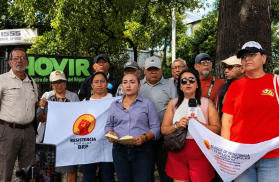
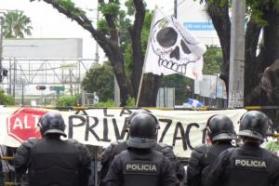
Bukele presented the Foreign Agents Law on May 14 amid international outrage over the repression by military and riot police of a peaceful vigil by members of the El Bosque Cooperative, a community of nearly 300 rural families protesting eviction. Police arrested José Ángel Pérez, a pastor and cooperative president, and Alejandro Henríquez, a human rights lawyer and environmentalist supporting the community.
Bukele took to X to allege that the cooperative, which has been fighting a legal battle to remain on land won through 1980s land reform, was “manipulated by self-described leftist groups and globalist NGOs, whose only real goal is to attack the government.” He sent the Foreign Agents Law to the legislature the following day.
A 2021 attempt by the Bukele government to pass a similar law was abandoned after widespread domestic and international condemnation. This time, however, his party approved the bill with no debate less than two hours after it was scheduled for a vote.
The law, which took effect on June 7, is extremely broad, applying to “all natural or legal persons, national or foreign, within Salvadoran territory who respond to interests, are controlled, or financed directly or indirectly by a foreign principal.” It defines a “foreign principal” as “foreign individuals; agents or representatives of a foreign government; members, representatives, or affiliates of a foreign political party; as well as any foreign legal entity, organization, or corporation organized or established under the laws of another country, or with its principal place of business in a foreign country,” or anyone whom the newly formed Registry of Foreign Agents determines should be categorized as such.
NGOs in El Salvador are already required to provide the government with reports of all sources of their funding - foreign and domestic - as part of their regular accounting practices. Now, the executive branch will have vast discretionary power to define groups or individuals as foreign agents or to grant exemptions, raising concerns that organizations critical of the government will be politically targeted. Those that do not register within the established ninety-day window risk massive fines of up to $150,000 or closure. Organizations that attempt to register but do not meet the government’s requirements, which includes providing descriptions of projects and their budgets, may simply be shut down.
Social movement and international organizations denounce criminalization of organizing
Grassroots organizations in El Salvador are clear that the aim of the law is to “limit freedom of expression” and criminalize large swaths of society. It prohibits organizations or individuals that receive foreign funding from performing “activities for political or other purposes, with the aim of: altering public order, which put at risk or threaten national security or the social and political stability of the country” or risk catastrophic fines, in this case, up to $250,000, and revocation of permission to operate.
The United Nations Office of the High Commissioner for Human Rights warned that the law “contains vague language and provisions that could unduly restrict rights to freedom of association and expression. It is likely to stigmatise and negatively impact the important human rights work carried out by civil society organisations in El Salvador, with some potentially forced to halt their activities.”
Immediately following its passage, ninety Salvadoran civil society organizations and international allies released a statement demanding “the veto or repeal of the Foreign Agents Law, as it is a law that promotes criminalization, control, and censorship of civil society organizations, as well as for its impact on the most impoverished and vulnerable populations.”
In a press conference, Verónica Reyna of the Catholic Passionist Social Service (SSPAS) stated: “It is evident that the purpose is…to punish the organizations that are denouncing corruption, that are demanding transparency, that are demanding accountability, that are identifying and denouncing human rights violations, and that have accompanied victims.”
Hundreds if not thousands of the over 8,000 registered NGOs in El Salvador now risk being shuttered.
NGOs, organizers warn of impact on impoverished populations
Beyond having their activities curtailed, nonprofit organizations that are able to register predict a reduction in the services they can provide due to the 30% tax on their funding. Leslie Schuld of the Center for Exchange and Solidarity (CIS) told La Prensa Gráfica about the potential impact on her organization’s programming: Referencing a project to build 50 homes at the cost of $16,000 each, she wondered, “Will we now have to raise $24,000 to build each home in order to pay the government $8,000 for each house?”
As a result of decades of U.S.-backed neoliberal policies, many people in marginalized communities in El Salvador receive basic services from NGOs, rather than from the State. According to Cristosal’s Abraham Abrego, “Civil society organizations, through their different services, work in education, health, community development - not just human rights. The impact of this law goes beyond the organizations. It affects those who use their services. Who finances programs to support victims in this country? It is the civil society organizations.”
Though foreign aid has a long and contradictory history of counterinsurgency in El Salvador and throughout the Global South, organizers like María Inés Dávila of the University Movement of Critical Thinking Civil have stressed that many organized communities in El Salvador have been able to utilize “solidarity support from other countries” to advance their own development, for example, to recover ecosystems, build housing, and promote food sovereignty. During a June 1 press conference evaluating the first year of Bukele’s unconstitutional second term, she argued that “these processes could not have been carried out if organizations across the country had not taken on responsibilities that for years the State has not carried out, [in particular, during] these last few years where the government has not responded to the needs [of the population].”
Whose sovereignty?
Bukele alleges – and not for the first time – that “globalist NGOs” are manipulating the population. Echoing similar rhetoric from the MAGA camp, he has repeatedly claimed that George Soros-funded groups and “global elites” were intervening in El Salvador, taking aim at journalists who have exposed major corruption scandals within his regime.
But this claim rings hollow, especially considering that many of the internationally funded civil society organizations and media outlets who have been vocal against Bukele were also staunch critics of the previous governments under the leftist Farabundo Martí National Liberation Front (FMLN).
In a similar vein, Bukele joined the right-wing’s celebration of the shuttering of the U.S. Agency for International Development (USAID), previously a significant source of foreign assistance to El Salvador. But Bukele's complaints that USAID channeled funds into “opposition groups, NGOs with political agendas, and destabilizing movements” are more true of U.S. efforts to undermine his FMLN predecessors and other left-leaning governments around the world whom the U.S. deems a threat to its investment interests. Despite his attempts to co-opt anti-imperialist rhetoric, the Bukele administration actually benefits from U.S. aid and support under both Biden and Trump.
Bukele’s Foreign Agents Law aims to delegitimize and silence the growing discontent in El Salvador, painting it as a product of interventionism and “globalism.” But the grassroots and popular movement organizations that have been organizing and speaking out against repression in El Salvador for the past several years attribute Bukele’s recent decline in public opinion to unpopular decisions like overturning the 2017 mining ban and offering to jail migrants for the U.S. in his mega-prison, as well as the effects of an ongoing economic crisis, three years of suspended civil liberties and due process under the State of Exception, and corruption allegations.
For further information on and international reactions to the Foreign Agents Law:
· International Center for Non-Profit Law: Comments on El Salvador’s New Foreign Agents Law
· New York Bar Association Statement of Concern
· June 13, 2025 statement by international legal and human rights organizations in the Americas calling on the Organization of American States and the United Nations to “condemn this legislation”
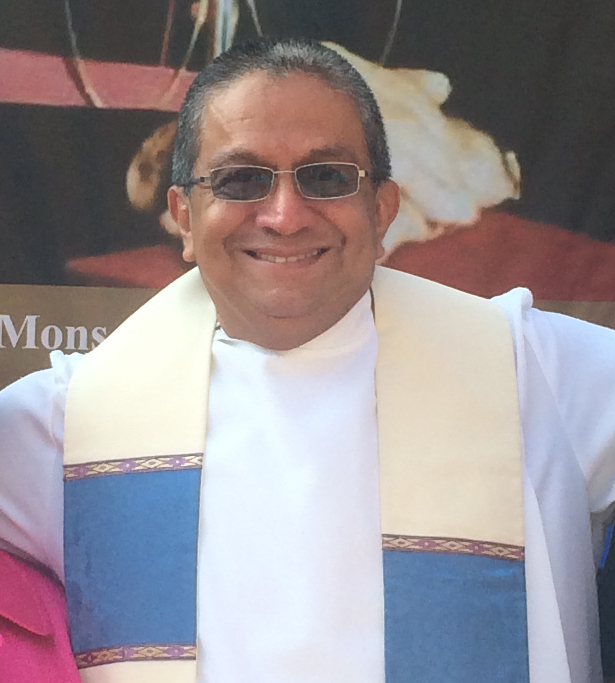 "I am a CISPES supporter because continuing to fight for social justice and a more people-centered country means continuing the dream and sacrifice of thousands of my fellow Salvadorans who died for that vision.” - Padre Carlos, New York City