Bukele’s Legislature Approves “Constitutional Coup”
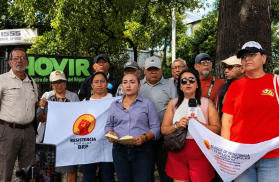
On January 29, El Salvador’s Legislative Assembly ratified a constitutional amendment allowing for the Constitution to be changed with three-quarters legislative approval, giving Nayib Bukele and his congressional supermajority free reign to change the country’s fundamental governing document at will. The move is being denounced as a constitutional coup, paving the way for the removal of any constitutional restraints on the authoritarian Bukele.
Bukele and Nuevas Ideas deputies justified the move, which ignored legal procedures, as a necessary step in eliminating public election financing (referred to as deuda política in El Salvador) from the national budget, which would force political parties to depend on private donors. Critics claim that this justification is one of many recent attempts to appeal to populist frustration and redirect anger away from unpopular and failed government policies.
How did this happen?
On April 29, 2024, two days before the end of the 2021-2024 legislature, legislative deputies from Bukele’s Nuevas Ideas (New Ideas) party modified the agenda to introduce a constitutional amendment that would change Article 248, which establishes how the Constitution can be amended. The amendment was fast-tracked, bypassing committee approval, and passed by the ruling coalition.
Prior to the amendment’s ratification, constitutional amendments required approval by a majority of deputies in one legislative period and ratification by two-thirds in the following legislative period. It also required a period of dialogue and that legislative elections take place between the two votes. With the initial approval taking place in April, months after the February 4, 2024 legislative elections, this requirement, intended to provide voters an opportunity to express their approval or disapproval of legislators and their proposed constitutional changes, was violated by Nuevas Ideas deputies.
Addressing her colleagues in the Assembly, Marcela Villatoro, one of three opposition deputies in the 60-member body, decried, “You are bypassing all of this in order to accomplish your sanctimonious agenda.”
Bukele’s ruling coalition, with near total control of the Legislative Assembly, was elected following 2023 changes to the Assembly that reduced the total number of seats in the legislature from 90 to 60 and changed the way seats are assigned. Both of these changes benefited Nuevas Ideas and their allies, helping secure their 95% control in the Assembly through a vote that was rife with irregularities and accusations of ballot stuffing.
Why now?
A January 22 University of Francisco Gavidia poll revealed Bukele’s popularity is at an all-time low. Budget cuts announced in September, which cut funding to education and healthcare and eliminated over 11,000 government jobs, provoked widespread condemnation and protests against the measure.
Weeks later, Bukele announced his intention to overturn a popular 2017 law prohibiting metals mining. The Legislative Assembly approved the reactivation of mining on December 23, as many Salvadorans were preparing Christmas celebrations, but opposition to the new law has been significant. Thousands took to the streets on January 12 and 19 to oppose the measure and Bukele is scrambling to regain support as protests continue.
As disapproval grows, Bukele has announced a series of measures aimed at quelling the criticisms. He announced that his government would pay January electricity and water bills for most of the population and nullified traffic tickets issued since the adoption of a controversial December 20 transit law.
Days before the Wednesday vote that ratified the constitutional amendment, Bukele foreshadowed the move in a tweet promising to end public election financing, which is enshrined in the Constitution. This rhetoric, relying on an oft-repeated vilification of opposition political parties, was parrotted by Nuevas Ideas legislators as they took up the amendment. Opposition lawmakers rebuked the narrative as a smokescreen, asserting that, if they wanted to strike down the amendment, they could do so “without having to change the whole Constitution.”
What’s next?
Bukele’s 2024 reelection relied on a much-maligned Supreme Court interpretation of a clause prohibiting consecutive presidential elections. The same ruling, issued by a court of Bukele loyalists instated following the illegal removal of the previous justices in 2021, made it clear that Bukele would not be eligible for reelection in 2029. While Bukele has stated that he will not stand for reelection again, his allies in the Assembly now have the power to amend the six constitutional articles standing in his way.
It is almost assured that public election financing, which would benefit opposition parties, will be removed from the Constitution. In practice, the Bukele government adopted this policy at the beginning of its tenure. In the 2024 elections, Bukele’s government withheld these funds until days before the elections. Opposition parties never received funding for the 2021 election.
In 2022, Vice President Félix Ulloa presented Bukele with 216 potential amendments to the Constitution. Such significant changes to the Constitution, comprised of 274 articles, according to critics, would essentially amount to replacing the document.
The proposed amendments range from replacing the Supreme Electoral Tribunal, established with the 1992 Peace Accords, to an expansion and further politicization of the armed forces, which would violate those same Accords.
In the words of the Diario CoLatino newspaper’s David Alfaro, “The Constitution of any democratic nation is the shield that protects citizens from the abuse of power. In El Salvador, that shield has been reduced to a mere piece of paper that can be molded to suit the convenience of the regime.”

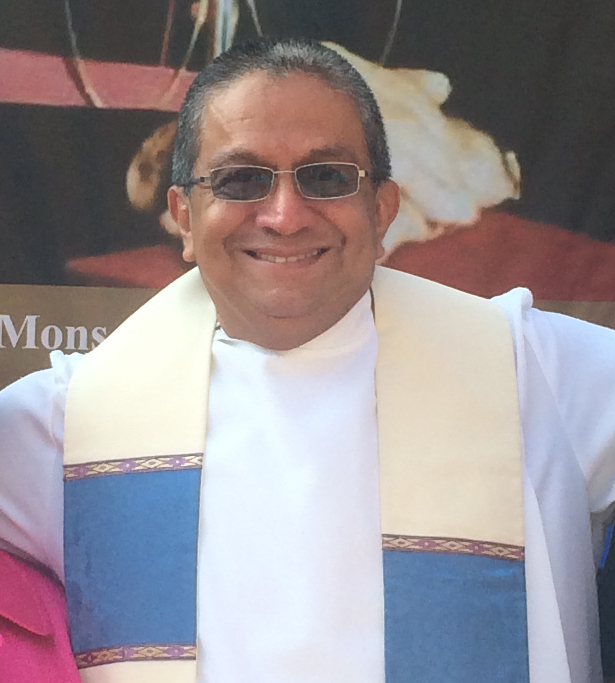 "I am a CISPES supporter because continuing to fight for social justice and a more people-centered country means continuing the dream and sacrifice of thousands of my fellow Salvadorans who died for that vision.” - Padre Carlos, New York City