Latin American leaders call into question US Drug War Policy
By Allen Hines CISPES intern in Portland OR The debate about drug policy has been heating up in Central America since in January 2012, when recently-elected Guatemalan president, Gen. Otto Pérez Molina called on his counterparts to consider drug decriminalization as a solution to the high levels of violence in Central America. He joins several current and former Latin American leaders in calling for alternatives to the War on Drugs, which has been heavily funded and promoted by the US government, especially following the launch of Plan Colombia in 2000. Pérez-Molina’s proposal – and its favorable reception from several other Central American presidents – sent the United States reeling. A wave of officials, from Secretary of Homeland Security Napolitano to Vice-President Biden, traveled to the region to express firm opposition to any form of legalization. While in Honduras, William Brownfield, head of the State Department’s lead counterdrug agency, declared, "In America we have analyzed this concept and agree that it's no good, that it does not work, not for moral, psychological, health and crime reasons." The swift response by the US seems to have temporarily closed the door on this discussion in Central America. For example, El Salvador’s President Funes initially supported Perez Molina’s proposal to discuss the possibility of decriminalization at an upcoming regional summit. But following Brownfield’s February visit, Funes joined President Lobo of Honduras and Ortega of Nicaragua in issuing a joint statement against legalization. However, the urgency to find real solutions to the security situation - Honduras and El Salvador now have the highest homicide rates in the world- carried the debate all the way to the Summit of the Americas held April 14-15 in Cartagena de las Indias, Colombia. This is not the first time that Latin American leaders have suggested that that pulling the profit out of drug market could address problems like high levels of violence and political corruption. In June 2011, the Global Commission on Drug Policy, a high-profile group of world leaders, including former presidents from Mexico, Brazil, Colombia and former UN Secretary General Kofi Annan, issued a report calling on the Obama administration and other leaders to end the criminalization of drug use. At the press conference to release the report, former Colombian president César Gaviria said, “We can no longer ignore the extent to which drug-related violence, crime and corruption in Latin America are the results of failed drug war policies … Now is the time to break the taboo on discussion of all drug policy options, including alternatives to drug prohibition.” However, President Obama held firm that “legalization is not the answer.” Thus, the 2012 Summit became another forum for the United States to reject several initiatives backed by the vast majority of the hemisphere. In addition to the drug war, the Summit showcased deep divides regarding British control over the Malvinas islands off the coast of Argentina and the continued exclusion of Cuba from the Summit; on both issues, only the United States and Canada dissented. Thirty-one countries refused to sign a joint declaration at the end of the summit, in protest of Cuba’s exclusion. As Reuters reported on April 25, “This rare show of unity highlights the steady decline of Washington's influence in a region that has become less dependent on U.S. trade and investment, thanks to economic growth rates that are the envy of the developed world and new opportunities with China.” This was the first Summit which was unable to issue a joint declaration, due to the United States’ imposition what Salvadoran newspaper Diario CoLatino has called its “imperial veto.” As Guatemalan president Pérez Molina concluded, “I feel that the agenda of the United States and the agenda of Latin America countries, instead of moving in parallel to each other, or converging, are taking paths that separate them, that distance them.” The obstacles posed by the US and Canada raise questions as to whether Latin American and Caribbean countries will continue to participate in any future Summits of the Americas, which was created by President Clinton in 1994 to promote passage of the Free Trade Area of the Americas. The development of alternative economic and political decision-making bodies led by South American countries, including Community of Latin American and Caribbean States (CELAC) and the Union of South American Nations (UNASUR), have the potential to displace structures like the Summit and the Organization of American States (OAS) through which the US continues its attempts to maintain dominance in the hemisphere.
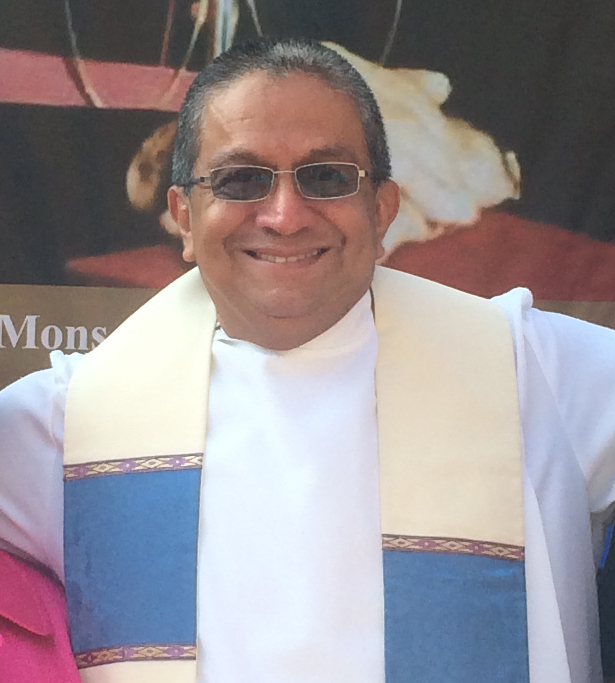 "I am a CISPES supporter because continuing to fight for social justice and a more people-centered country means continuing the dream and sacrifice of thousands of my fellow Salvadorans who died for that vision.” - Padre Carlos, New York City