What November could mean for El Salvador
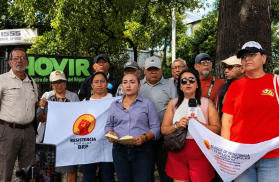
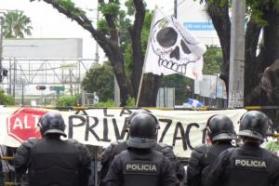
Whether Mitt Romney or Barack Obama wins in November it is hard to say that either candidate is a good choice for people who care about economic and social justice in Latin America. “If El Salvador becomes another Latin platform for advancing an anti-American agenda, it will negatively impact future levels of U.S. assistance through the Millennium Challenge project and USAID as well as on U.S. immigration matters.” Scary, right? Assert your rights as a country, and you face negative consequences. Unfortunately, this example of classic US dollar diplomacy, written shortly after El Salvador elected its first president from the leftist political party, comes from the co-chair of Republican presidential candidate Mitt Romney's Latin America team, Ray Walser. By “anti-American,” Walser, who is also a fellow at the far-right Heritage Foundation, means anyone who stands up to political, economic and military interventions by the United States. Specifically, he puts Salvadoran President Mauricio Funes in league with Venezuala's Hugo Chavez and Bolivia's Evo Morales, both of whom have worked against US imperialism. Days before Salvadoran President Mauricio Funes won the election in 2009, the Obama administration issued a statement that it wouldn't try to influence the vote. Walser's claims suggest that wouldn't be the case under a Romney presidency. Romney's past, his current policy positions and his choice for vice president also point to a strategy of increased political and military intervention and more pressure to privatize public services. In a recent stump speech at a college, Mitt Romney told students to start their own businesses by borrowing money from their parents. However out-of-touch the statement was to working-class students, a loan from their parents is a lot less shady than Romney’s source for start-up capital. His company, Bain Capital, was started with money from people connected to death squads in El Salvador. Romney's vice presidential pick, Paul Ryan, also has sore spots related to the Salvadoran Civil War. Elliott Abrams is his foreign policy adviser. Serving as US Assistant Secretary of State in the Reagan administration, Abrams not only attempted to cover up the 1981 El Mozote massacre by the Salvadoran military, but he also admitted that he lied to Congress about the Iran-Contra scandal, which funneled arms to right-wing forces in Central America. The drug war continues to rage in the region, and Romney's platform may signal continued if not increased militarization. As a solution to the unsubstantiated threat of trans-border drug trafficker violence, it puts forward the need to complete the US-Mexico border fence, a perennial priority for the Republican agenda. An enhanced border fence sends a clear message of who and what is valuable to powerful people in the United States. As US foreign policy presses Central American countries to continue to open their economies and natural resources to international exploitation, the resulting economic and environmental refugees will have a tougher time crossing the border. And Obama? His is not exactly a record worth touting either. Following the 2009 Honduran coup, the United States, along with Canada, was among the first nations to recognize the government of Porfirio Sosa Lobo. The Lobo regime is notorious for its repression of peoples standing up for their rights, among the campesinos in the Aguan Valley. The Obama administration has increased funding for the drug war under the Central American Regional Security Initiative, which has led to the killing of civilians in Central America. In addition, the administration shut down a regional debate around drug legalization in the spring. And the United States continues to push free-market economic policies in Central America. The Partnership for Growth was a first step in the drive for privatization and “public-private partnerships” as the way to spur economic development. Though it was originally devised as a development plan, the Partnership for Growth in some ways has morphed to emphasize citizen security and policing. Salvadoran magazine El Faro has reported that in return for US support for the plan – now with the enhanced emphasis on security – Pres. Mauricio Funes removed almost all of the FMLN officials from the Security Ministry. Another privatization scheme backed by the United States, the Public-Private Partnership Law, is under consideration in the Salvadoran legislature. Comalapa airport and the seaports of La Libertad and Acajutla will likely be primary targets for the law. US policy toward Latin America since the 1980s, regardless of which party controls the presidency, has followed a trajectory toward neoliberal economics. As Obama's record demonstrates and Romney's platform suggests whoever wins in November, the work of solidarity activists pressuring for more sovereignty for El Salvador and the region will remain vital. By: Allen Hines CISPES researcher in Portland OR
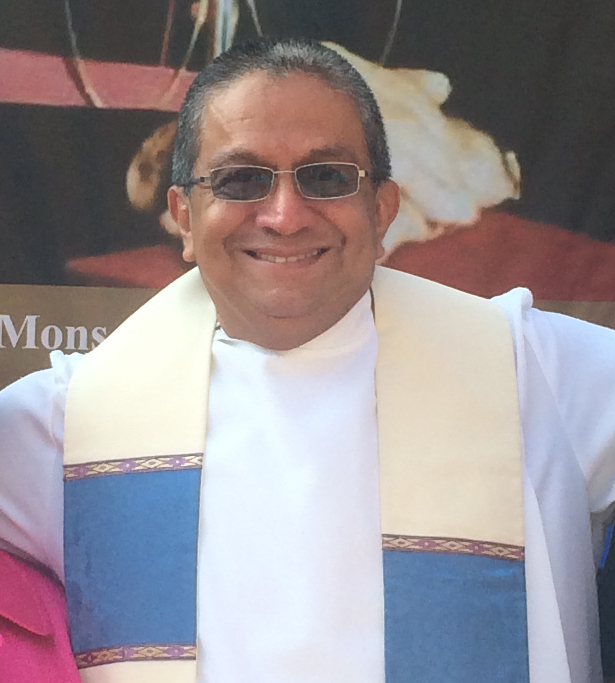 "I am a CISPES supporter because continuing to fight for social justice and a more people-centered country means continuing the dream and sacrifice of thousands of my fellow Salvadorans who died for that vision.” - Padre Carlos, New York City