Millennium Challenge Finances New Industrial Corridor, Criticism against Current Projects Continues
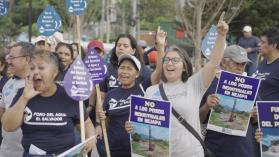
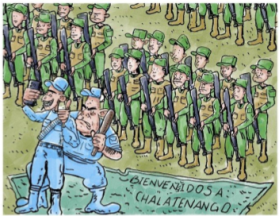
President Mauricio Funes announced that the country will begin a second stage of projects financed by the Millenium Challenge Corporation (MCC) in November 2012. The MCC, a public-private development agency, was created by the US Congress in 2004 to provide grants to poor countries as incentives for political change. It is administered by Secretary of State Hilary Clinton, US Trade Representative Ron Kirk, Secretary of Treasury Timothy Geithner, as well as representatives from the United States corporate and financial sectors. Funes' announcement follows a visit with MCC representatives during the last week of January, in which the MCC publicly commended the first stage of projects they financed in El Salvador. These projects began in 2007 under President Tony Saca's administration and, according to government officials, are 95% complete. They focused on the construction of the Northern Longitudinal Highway and connecting roads. While the stated purpose of the highway was to encourage economic development in the infrastructure-poor north of the country, Salvadoran economist Raul Moreno claims the real purpose is to “construct the infrastructure so that transnational corporations can more easily extract the country's natural resources.” He notes that the highway construction is in a zone where US and Canadian mining companies are eyeing gold reserves and where environmental activists continue facing threats and violence. Throughout the construction process, communities in Chalatenango and Cabañas have protested being deceived into signing over their properties for the construction of the highway. El Salvador's largest construction workers union – the Industrial Construction Workers' Union (SUTC) - has also denounced foreign construction companies contracted by the MCC for ignoring the construction workers' collective contract with the national guild of construction companies, an established requirement for foreign companies to receive MCC funds. Funes received President Barack Obama's commitment to finance a second stage of projects during a visit to the White House in March of 2011 where the two presidents also committed to increased security cooperation. The second stage of MCC-financed projects that will begin in November are still not completely defined; but El Salvador will present its initial proposals on March 15. This stage of projects will be focused on El Salvador's coastal zone with the goal of creating a logistical and industrial corridor between the Acajutla Port, Comalapa International Airport, and the recently constructed La Unión Port. Construction was finished on the La Unión Port in 2009, but it is not yet operating at full capacity due to disagreements in the legislative assembly regarding the concession of the port to a private operator. The leftist Farabundo Martí Front for National Liberation (FMLN) fraction maintains that the government must retain at least 51% of the port's holdings by law; however, right-wing parties want to grant over 50% of holdings to a private company. While the bidding process for an operator has begun, these questions have still not been resolved. Considering that one of the political objectives of MCC financing is defined as “economic freedom,” which amounts to free-market policies that promote privatization of public resources and services, the new coastal zone projects will likely be used as incentives to fully privatize the La Unión Port, thus placing a public asset that the Salvadoran people are still paying for (in the form of a loan from the Japanese government that financed the port's construction) into private hands for private profit.
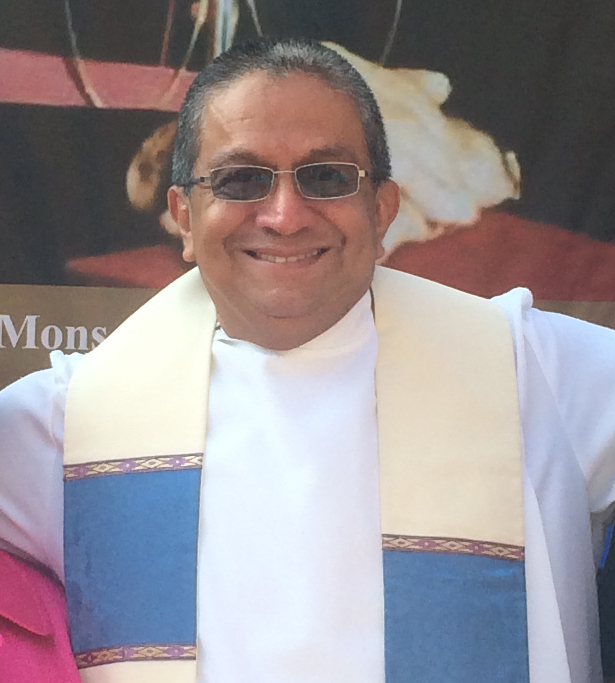 "I am a CISPES supporter because continuing to fight for social justice and a more people-centered country means continuing the dream and sacrifice of thousands of my fellow Salvadorans who died for that vision.” - Padre Carlos, New York City