|
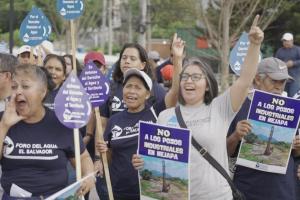
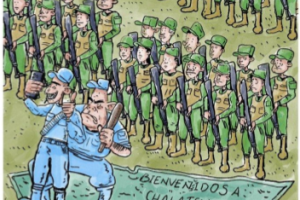
On October 12, riot police in the Salvadoran department
of Santa Ana –
accompanied by Salvadoran soldiers – barged into the rural community of Cutumay
Camones, attacking community members, including children and elders, for
protesting against the construction of a garbage dump in their community. For
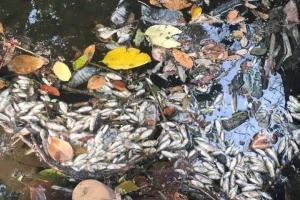
months, the community organization ACOFUBEN has protested the garbage dump, as
it will contaminate their water source and create a series of health problems
for the community.
Community members are enraged at the violation of their
right to be consulted on the building of the dump, and Human Rights Ombudsman
Oscar Luna has criticized its construction for not having the appropriate legal
permits from the Environment Ministry. The report that the Legislative Assembly
received from the Salvadoran Court of Audits declared irregularities on the
permit that the Environmental Ministry awarded to Presys, a private company. The
permit application did not have an adequate environmental impact report and it
was granted in violation of Article 25 of the Environmental Law, which demands
that the public be consulted on any such project. Now, people must protest the
construction of the dump in order to defend their water and health.
On October 12, police and military repression began
during the early hours as tear gas and rubber bullets targeted the community,
wounding many people. Then on October 25 the community was victim of another
violent attack by the riot police. Media footage of the repressive police
actions has been widely distributed, alerting the international community of
these violent attacks and revealing the excess force of the riot police acted.
Amidst the attack on the community, one television journalist was targeted by
the riot police. You can see a
videos of the attack here.
Since the incident with the journalist, police
authorities have removed the offending police officers from the National
Civilian Police. However, the removal of single officers for the attack on the
television journalist is insufficient, as the military and police continue to
defend private interests by repressing the community, and the construction of
the garbage dump will go forward despite the community objection and protest.
Social organizations continue to monitor and support the community in denouncing
the ongoing repression and are calling for a real solution to the
situation.
The FMLN and social organizations have denounced this
repression and are demanding for the violence to be condemned by the government.
ARENA deputies in the Legislative Assembly have rejected the FMLN’s demands,
assuring the public that the riot police “were simply doing their job.” However,
Saca himself has admitted that there was an “excess of force” applied by the
riot police against the population, but that it is “an isolated case.”
Health Privatization Law approved by
right wing parties
On October 22, ARENA and PCN deputies approved the
National Health System proposal so that it could go to a vote in the Legislative
Assembly on October 25. The proposal of a National Health System law was created
by the Francisco Flores administration and has been discussed since June of this
year in the Health and Environmental Commission of the Salvadoran Legislative
Assembly.
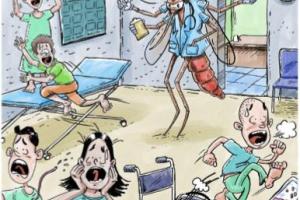
Social organizations and the FMLN have ardently rejected
this law as it opens up the doors to the privatization of the national health
system, which would leave the majority of the Salvadoran population without
access to health care. FMLN deputy Zoila Quijada said “let’s see if President
Antonio Saca will keep his word to not privatize the health care system by
vetoing this law.” According to Quijada, if the President ratifies the law he
will only be building on the economic repression of his government by
privatizing another service that the government should provide to its people.
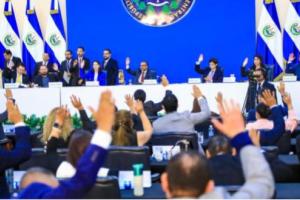
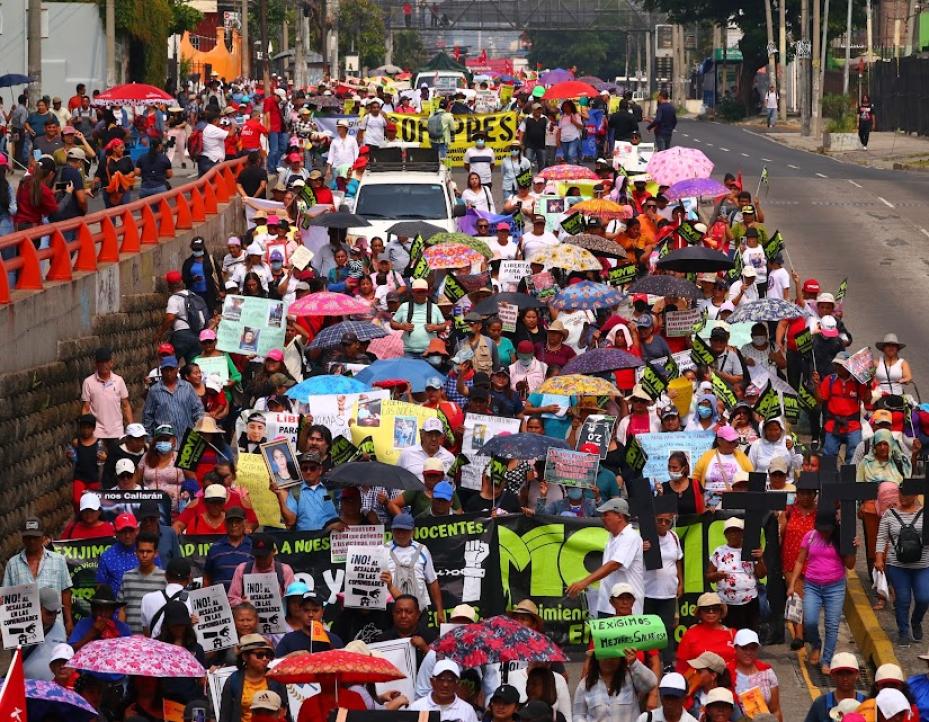
During the day of the vote, the FMLN and the Citizen
Alliance Against the Privatization of Health coordinated a protest against the
vote on the law. Inside of the National Assembly, the FMLN opposed the law, but
despite their arguments, the law was approved with the 52 votes of the right and
center parties (ARENA, PCN, PDC, and CD.) Currently, the FMLN and the social
movement have committed to continuing the struggle against the privatization of
health through further organizing and greater
mobilizations.
Social organizations and base
communities protest against impunity
In a meeting with the Inter-American Human Rights
Commission (IHRC) on October 10, the Salvadoran government sustained that it is
impossible to investigate crimes committed during the armed conflict of the
1980s due to the existence of the Amnesty Law approved in 1993. At the same
time, two Salvadoran human rights organizations held a follow up meeting with
the IHRC on the Archbishop Oscar Romero murder with the participation of the
Salvadoran government.
The Salvadoran government once again refused to accept
responsibility for the assassination of Romero even though the IHRC declared it
responsible for violating his “right to life” and for not investigating his
case. The IHRC also requested that the Salvadoran government reverse the Amnesty
Law, as it impedes the peace process toward peace in El
Salvador.
Opus Dei member and Archbishop of San Salvador Saenz
Lacalle has asked for patience and has defended the “open dialogue” between the
Salvadoran government and the Catholic Church, both of whom attempt to minimize
and silence Romero’s importance to the Salvadoran
people.
The Catholic Church’s Human Rights office has publicly
denounced the unwillingness of the Archbishop and the Salvadoran government to
investigate, but its public spokesperson David Morales was recently removed from
the office in a right-wing attempt to silence popular demand for justice in the
Romero case. Various social organizations and base communities have publicly
criticized Saenz Lacalle and the Salvadoran government for refusing to
investigate Romero’s case and allowing impunity to reign in El
Salvador.
|