Funes' Plan for Final Two Years of Administration Reflects Polarized Forces in El Salvador
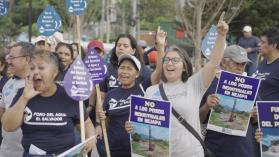
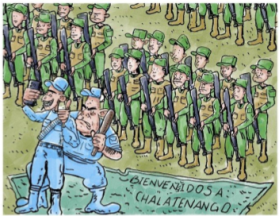
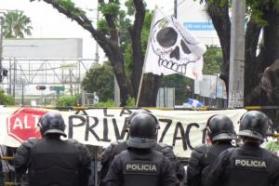
On June 1, three years since his inauguration, President Funes pledged to both increase social spending as well as to anchor El Salvador's economic growth to US-sponsored initiatives that relies on private and/or foreign investment. This proposal for his final two years reflects two polarized forces working on Funes: on the one hand, the left-wing, mass-based Farabundo Martí Front for National Liberation (FMLN) party and on the other, the alliance of US, transnational and Salvadoran economic business elite. In his remarks to the Legislative Assembly last Friday, Funes rightfully touted the advances made during his administration to expand El Salvador's social safety net. Social spending had increased by nearly 6 times from the previous right-wing administration of Tony Saca, from $35 million in 2008 to $201 million dollars in 2012. With increased funding has come new, innovative programs, created and implemented largely by the FMLN-led government ministries. These programs are having a greatest effect in supporting the long-neglected rural poor by providing free seeds to subsistence farmers, low-interest loans to farmers and small and micro-business owners, as well as in-home medical attention for residents of hard-to-reach communities. Other vulnerable sectors, like youth, are also benefitting from much-needed programs. For example, public school students of all ages can now count on a nutritious meal and a glass of milk offered daily at school. These programs are continuing to expand despite the constant critique by right-wing parties that this spending is irresponsible, unnecessary and souring El Salvador's economy. The IMF has even weighed in, recently freezing much-needed loan monies to El Salvador as punishment for "too much" government spending. Yet, the economic crisis continues to force the cost of living up to $370 per month in cities, where the private sector minimum wage is a paltry $189 - $220 per month for those lucky enough to have a formal sector job. With high costs and most of the workforce underemployed or forced to sell wares on the street, these social programs are more in need than ever. In this respect, the Funes administration - with the unflagging support of the FMLN legislative fraction and social movement organizations - has stood strong against the neoliberal economic notion of "small government." However, Funes' remarks indicate that the international economic elite is also re-gaining ground in Salvadoran economic policy. Funes, as his ARENA predecessors before him, is looking to major infrastructure projects - known as megaprojects and funded by transnational capital - as the path to development. Just a few months ago, his administration and the US-based public-private development agency, the Milennium Challenge Corporation (MCC), signed an agreement regarding the second round of projects in El Salvador, focusing on the airport, ports and coastal zones of the country. While the specific project outlines are still under negotiation, once the compact is signed the projects and monies are locked into a 5-year agreement that can not be changed by subsequent administrations. Community and campesino organizations in the coastal zone have already begun demanding that the new projects involve community consultation and incorporate the sustainable, grassroots development initiatives that have already been created by the local residents. However, community consultation has not been a hallmark of the US paxpayer-funded MCC, causing serious concern that the MCC will merely continue the "development" model that serves the interests of US and transnational corporations - creating more efficient transport routes to extract natural resources as well as providing necessary infrastructure - highways, electrical grids, ports, dams - for corporations to manufacture, assemble and ship products across the globe. President Funes also pointed to the Partnership for Growth (PfG) - a new development "framework" bestowed upon El Salvador and 3 other countries by the Obama administration - as a guiding force for economic growth. The Partnership for Growth is not aid money, but rather a set of agreements created by a team of economic advisors from the US and El Salvador that have assessed the greatest "constraints to economic growth in the country." In addition to the recommendations to further militarize El Salvador's public security, the PfG has prompted the Funes Administration to draft the Public-Private Partnership law. Still under scrutiny by the Legislative Assembly, this law would mandate private bidding on all large government contracts, just at a time when Funes has signed an agreement with MCC to invest in the public ports and airport. The Salvadoran labor movement has already started to mobilize against the Public-Private Partnership law, calling it simply a privatization law that will break public sector unions and make workers vulnerable to dangerous and unfair labor practices by private contractors; on May 1st, the FMLN publicly committed to oppose the law in the Legislative Assembly. Funes and his technical secretary, Oxford-trained economist, Alex Segovia, have also alluded to "reforming" a number of laws - the Investment Law, the Industrial Law and the law governming maquila zones - to make way for more foreign investment. With a majority of right-wing seats in the Legislative Assembly, the FMLN legislative fraction alone does not have the numbers to stop changes to these laws that would create even more exploitation of El Salvador's resources, land and people. In the past 10 years, Salvadoran unions, campesinos, community organizations,and students have organized blockades and strikes to effectively defend public services and to stop environmentally-destructive mining projects. The social movement will once again have to lead the battle against deregulation, harmful mega-projects, privatization of public resources and other traps of the neoliberal agenda during the final two years of the Funes administration.
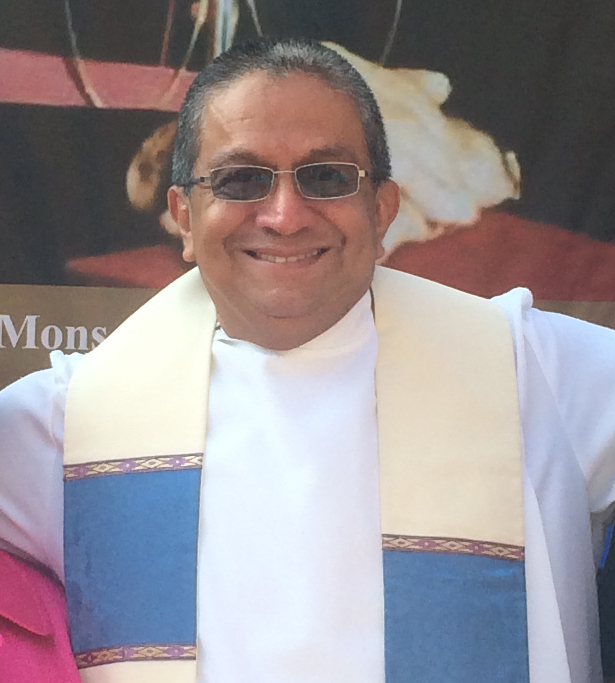 "I am a CISPES supporter because continuing to fight for social justice and a more people-centered country means continuing the dream and sacrifice of thousands of my fellow Salvadorans who died for that vision.” - Padre Carlos, New York City